

Predictive Programming: New Movie "Mercy" Depicts A World Of AI Governance Where AI Algorithms Determine People's Fate Or Face Execution - A Future Not Far Off
“In 2029 Los Angeles, a detective stands on trial accused of murdering his wife. He has 90 minutes to prove his innocence to the advanced AI judge he once championed, before it determines his fate.”


Set to be released in theaters on January 23rd, 2026, a new movie called “Mercy” depicts a dystopian world in the not-so distant future. “In 2029 Los Angeles, a detective stands on trial accused of murdering his wife. He has 90 minutes to prove his innocence to the advanced AI judge he once championed, before it determines his fate.”
Produced by Amazon's MGM Studios - the same studio that produced the new theatrical documentary “Melania,” following around President Donald Trump’s wife - “AI is the future of criminal justice, and it’s closer than you think,” the movie studio says.
The movie star ‘Christian’ Hollywood actor (an oxymoron) Chris Pratt.
Here are the trailers:
What a name…
Proverbs 14:22 Do they not err that devise evil? but mercy and truth shall be to them that devise good.
James 2:13 For he shall have judgment without mercy, that hath shewed no mercy; and mercy rejoiceth against judgment.
Now even though this movie is supposed to be theatrical and over the top on purpose, I bring this up because the propaganda machine known as Hollywood has an ‘uncanny’ way of telegraphing the future in many ways. I don’t consume Hollywood slop anymore these days, I choose not to waste my money on depravity and low brow debauchery;
But I mention this because such a dystopian future is not even that far off.
I’ve written about the Palantir-Oracle pre-crime surveillance state that is being ushered in, and how these big-tech oligarchs, media pundits, politicians, and religious leaders are openly lauding it to monitor everything we do to stop thought crimes and anything that goes against what they they believe.


Already in parts of the world, AI judges and lawyers are being implemented at a small scale, as I have documented before:
SEE: AI Algorithm Tells Lawyers How Judges Are Likely To Rule
City Council In Brazil Uses ChatGPT To Write An Ordinance That Was Enforced On 1.3 Million People
Lamentations 4:17 As for us, our eyes as yet failed for our vain help: in our watching we have watched for a nation that could not save us. [18] They hunt our steps, that we cannot go in our streets: our end is near, our days are fulfilled; for our end is come. [19] Our persecutors are swifter than the eagles of the heaven: they pursued us upon the mountains, they laid wait for us in the wilderness.
This is just the beginning. There are plenty of articles discussing how AI is already and will further become included in governance, law and judicial procedures, and will eventually become judges themselves.
The Harvard Kennedy School published a paper by Rt. Hon Sir Robert Buckland KBE KC MP, who wrote:
Artificial intelligence (AI) in the administration of justice is growing at rapid pace. This is driven by widespread recognition of AI justice’s undeniable advantages, despite the risks it presents to the integrity of legal systems.
AI justice may, for example, lower the administrative burden of cases. The Crown Courts in England and Wales ended 2022 with a near-record load of over 60,000 outstanding cases. AI can dramatically increase court efficiency and reduce backlogs, providing standardised outcomes faster and at lower cost. After all, AI judges do not need to rest. At the same time, AI-driven judicial decision-making could make justice more accessible to the large segments of society that cannot afford human lawyers.
Proponents also argue algorithms could improve the fairness of judgements because “AI judges strictly follow precedents, restrict improper judicial discretion, prevent personal biases and preferences of individual judges, handle large amounts of information, complete complicated calculative balances, and discover statistical representations of variations of fact patterns and legal factors”. Even where AI tools assist human judges, these tools can push relevant legal provisions through comprehensive data retrieval. This in turn can improve judges’ understanding of cases, helping them avoid one-sided access to data and information.
At this point, it is important to clarify the different ways in which AI is being deployed in the courtroom. At a foundation level, AI may be used for auxiliary administrative functions. This includes communication between judicial personnel, allocation of resources and cases, and ensuring the anonymisation of judicial decisions, documents, or data. These activities may ostensibly appear separate from the core of judicial decision-making but carry subtler implications. For instance, the allocation of a case to a specific judge, given their unique expertise or biases, could indirectly influence the outcome. These nuances notwithstanding, the primary objective of these AI-driven tasks remain administrative in nature, aiming to streamline the judicial process rather than directly determine case outcomes.
The list of articles goes on:
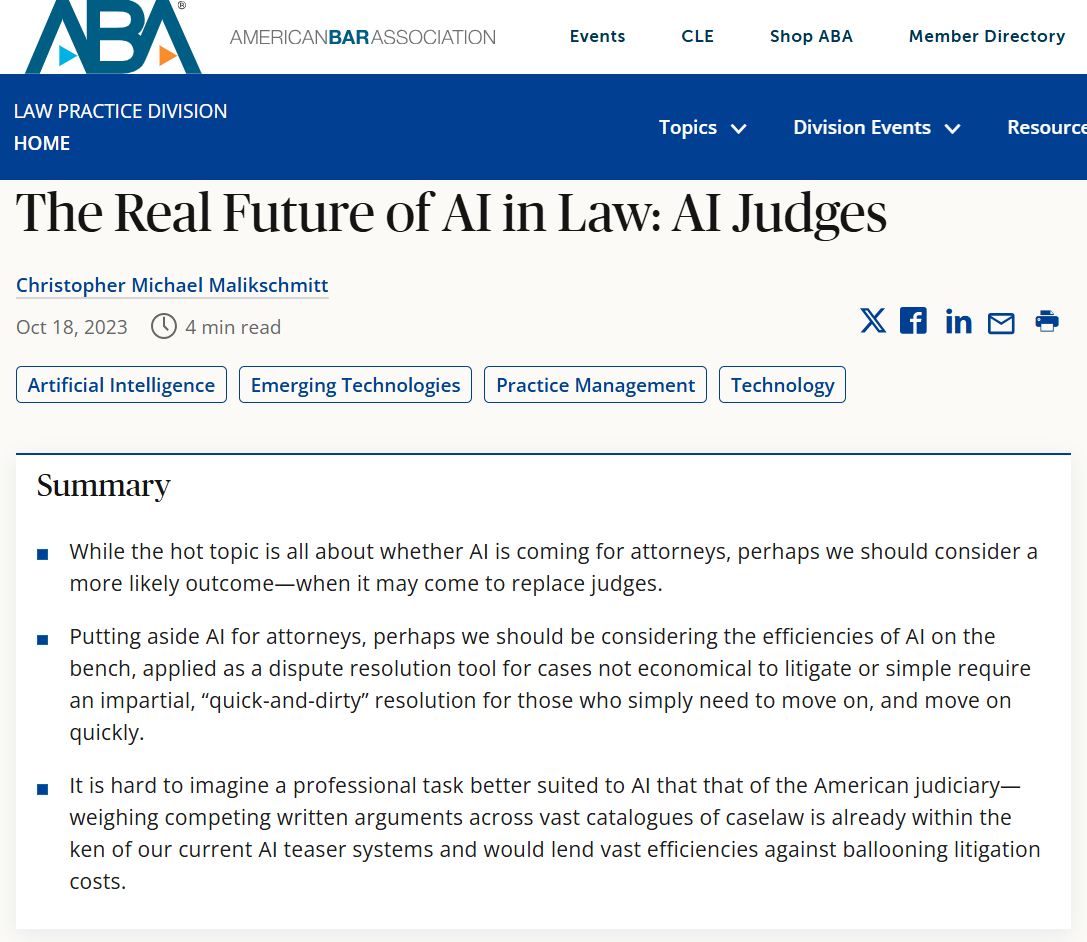
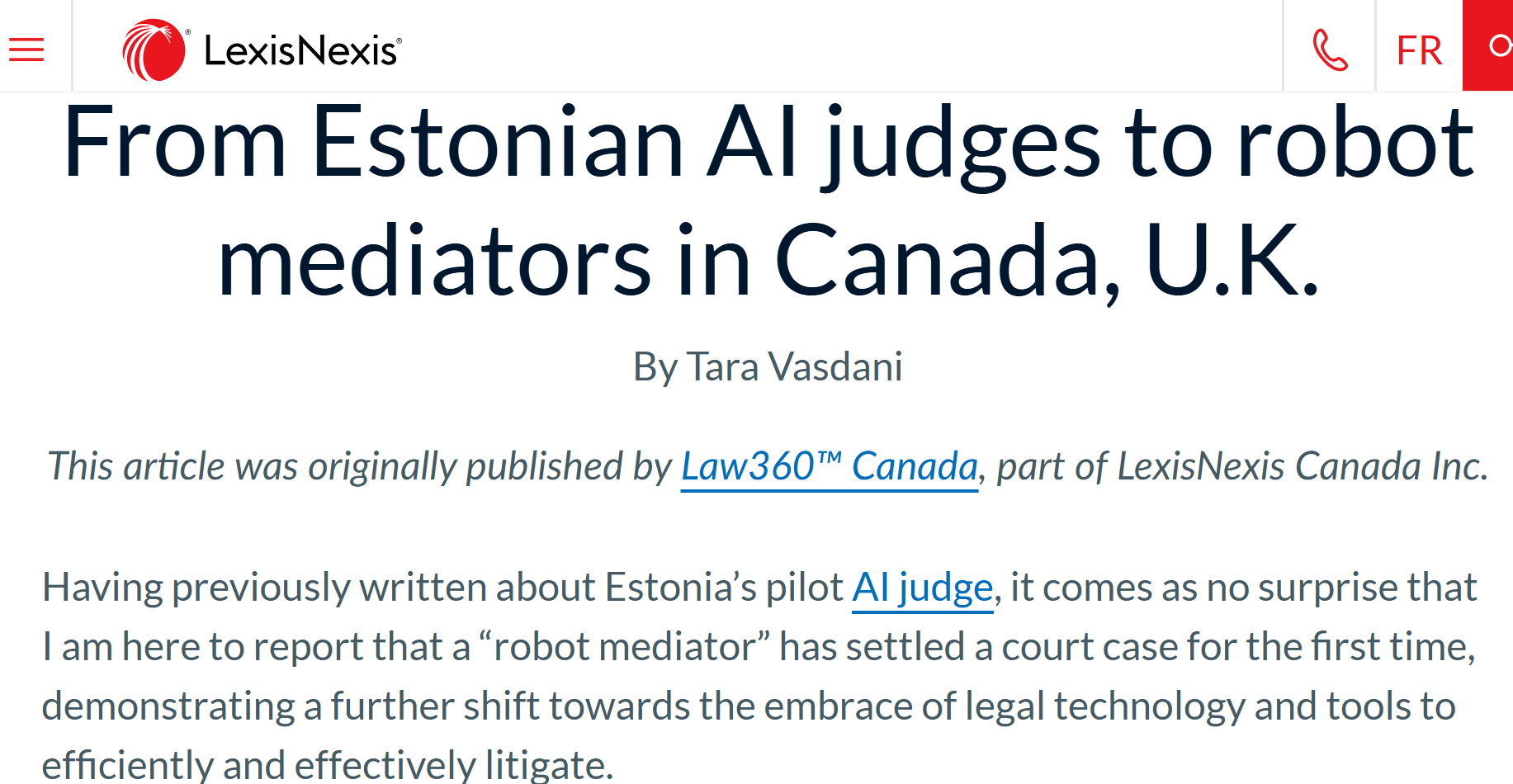
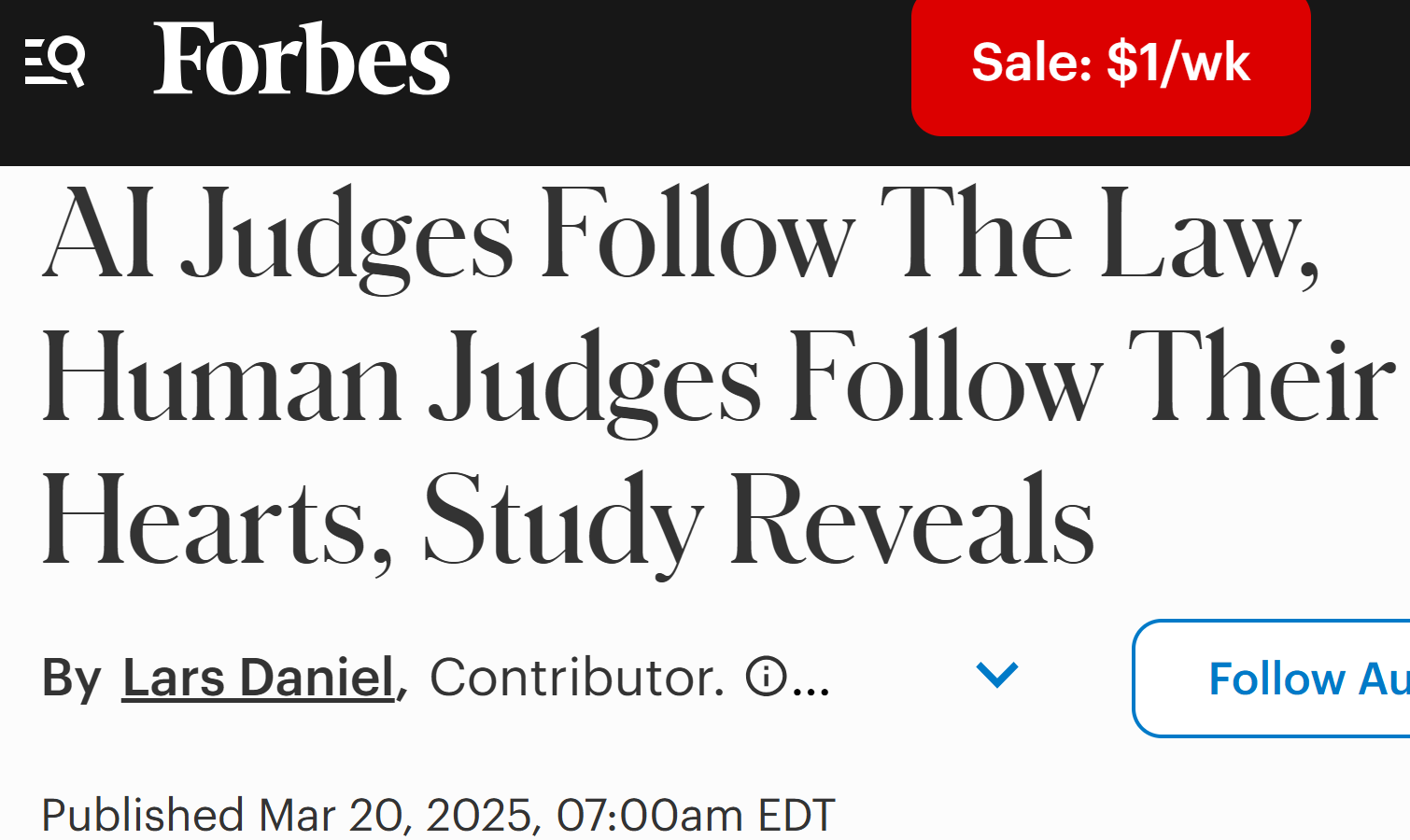
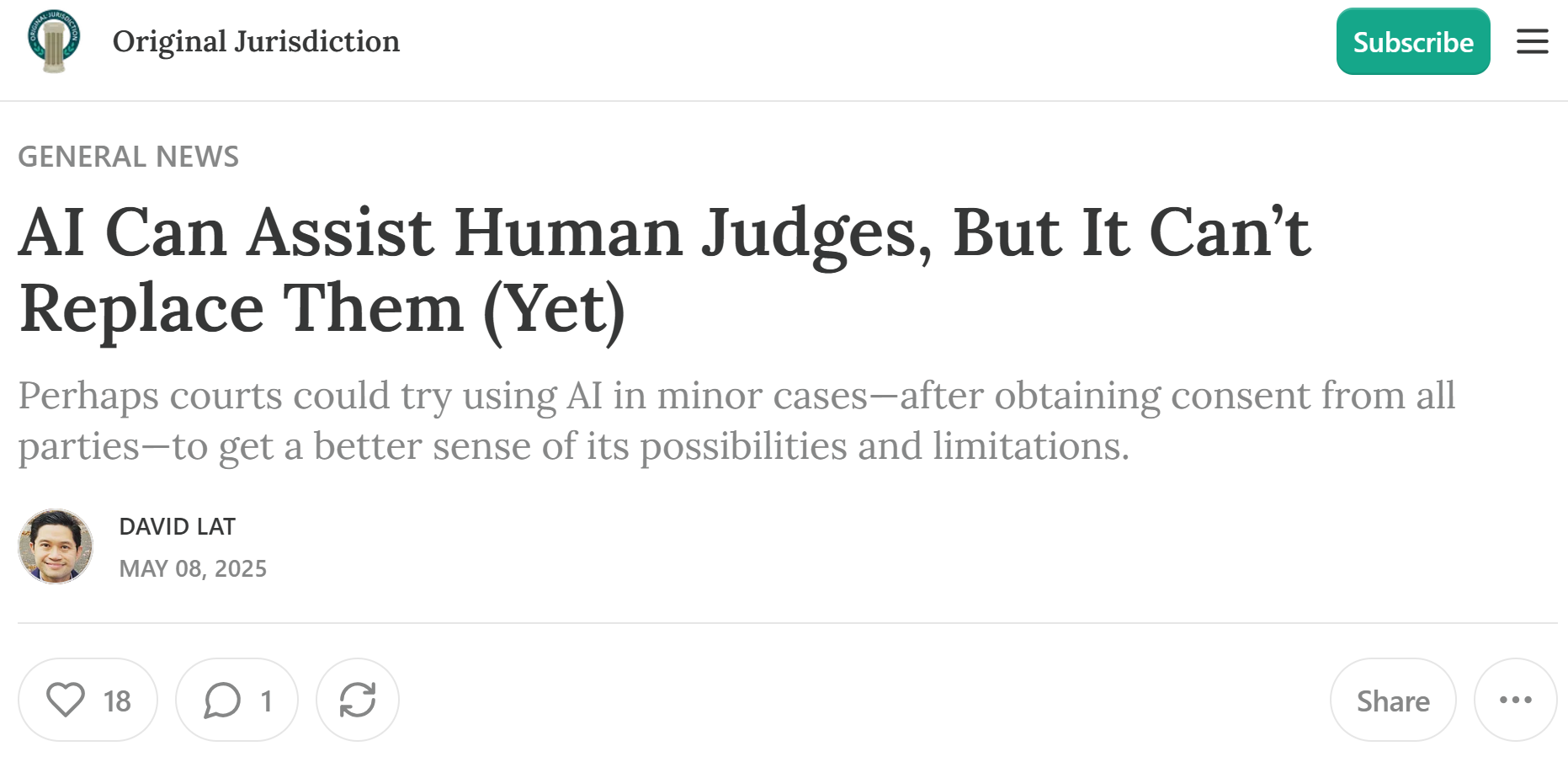
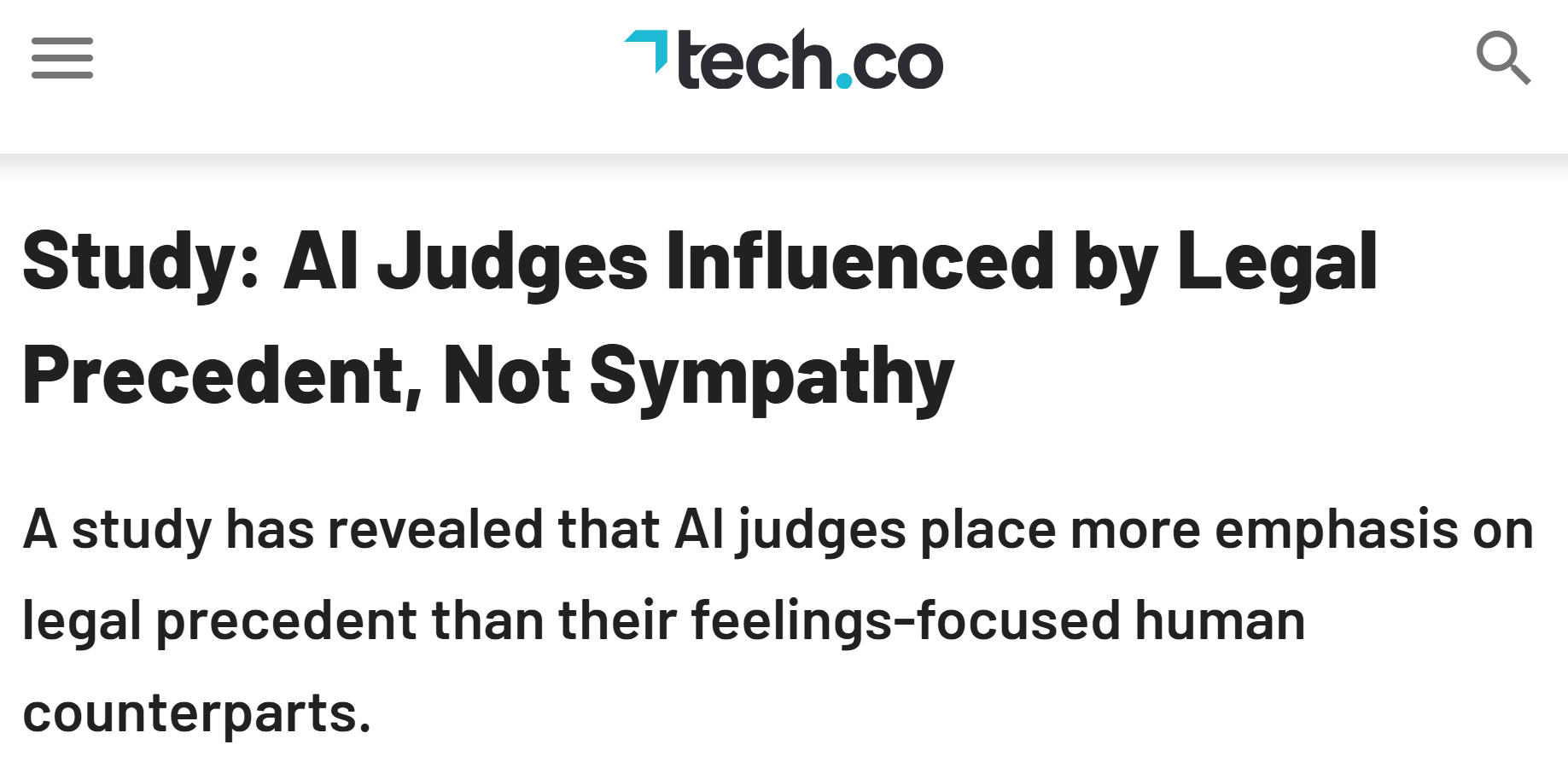
Fortunately, not all judges are accepting of this new paradigm.
Judge Frank Caprio, who died earlier this year, pushed back against this future.
Unfortunately, AI ‘justice’ is here to stay.
In the U.S., for example, though it is not really detailed all that much, President Trump’s AI Action Plan does make a brief allusion to AI deepfakes obstructing justice, and therefore recommends proper tools be put in place to deal with AI-generated slander, deepfakes and pornography. The paper does not outright call for AI judges, but it is not far-fetched to say this will be something that arises in the immediate future. Biometric Update commented at the time saying “the plan lays out a future where AI permeates every dimension of American life, but its safeguards hinge on voluntary compliance, fragmented oversight, and an ideological litmus test framed as neutrality.”

Proverbs 31:9 Open thy mouth, judge righteously, and plead the cause of the poor and needy.
How can that be done with robots and soulless algorithms?
“Mercy” may just be a movie for now, but what was once called science fiction and fantasy is now becoming reality, very quickly.
The Lord Of Glory: The Detailed Guide To Who God Is – Available Now!

On one of his missionary journeys, the apostle Paul visited Athens, Greece, where he said he witnessed “the city wholly given to idolatry,” and who were “too superstitious” and worshipped a plurality of gods and deities, though the people acknowledged that there was still one God above all that was a mystery to them. When questioned by the philosophers …
[7] Who goeth a warfare any time at his own charges? who planteth a vineyard, and eateth not of the fruit thereof? or who feedeth a flock, and eateth not of the milk of the flock? [8] Say I these things as a man? or saith not the law the same also? [9] For it is written in the law of Moses, Thou shalt not muzzle the mouth of the ox that treadeth out the corn. Doth God take care for oxen? [10] Or saith he it altogether for our sakes? For our sakes, no doubt, this is written: that he that ploweth should plow in hope; and that he that thresheth in hope should be partaker of his hope. (1 Corinthians 9:7-10).
The WinePress needs your support! If God has laid it on your heart to want to contribute, please prayerfully consider donating to this ministry. If you cannot gift a monetary donation, then please donate your fervent prayers to keep this ministry going! Thank you and may God bless you.
AI is a program that has programers.
If AI ever does anything you don't like then it was programmed to do it.
There was a short-lived TV series in the summer of 2001 called “The Lone Gunmen” (or something similar) that had a small group of counter-culture journalists who were investigating a deep, dark government/CIA plot to fly a commercial airliner into one of the World Trade Center towers. The heroes managed to save-the-day by interrupting the bad guys remote control of the airliner.
The intellectual leader/conscience of the group was an obviously Jewish grandfather type.
Each episode’s credits ended with a child’s voice saying “I made this!”.