Tokenization: How Tokenizing All Assets Fulfills The World Economic Forum's Stakeholder Capitalism Model, As BlackRock's Larry Fink And Other Elites Seek To Create Infinite Wealth
"Tokenization could facilitate the voting and/or ownership rights associated with the investment. There is a possibility of incorporating a stakeholder capitalism model," BNY Mellon revealed.
The following report is set to appear in the fifth edition of Revive The Table.
In my previous reports for Revive The Table, we have examined the process of tokenization, the process of representing assets and money digitally on a blockchain. The first report establishes what it is and how the White House and the Trump administration is quietly helping to usher this in the U.S. and Western world, including the necessity of digital IDs in order to facilitate the process; the second article explaining how what the current administration is doing aligns with the United Nations’ globalist goals for digital ID, and how that digital ID ecosystem interlopes with a social credit score system that is powered by tokenization; the third article covering BlackRock CEO Larry Fink’s plight to tokenize the financial world and usher in digital IDs; and the last edition dissecting what a tokenized world would look like as it coalesces with AI and the Internet of Things (IoT) and Internet of Bodies (IoB), where eventually everything and every person will be tracked and traced down to the last possible minute detail, all captured by tokens in real-time.
Please read those previous articles if you have not already to get better acquainted with the concept:
In this report, we are going to double-back and further analyze what Larry Fink has to say about tokenization and the future financial system.
On December 1st, The Economist, a London-based magazine partially owned by the Rothschild family, published a piece1 “on how tokenization could transform finance,” written by Fink and BlackRock chief operating officer (COO) Rob Goldstein.
The two once again explained what tokenization is in its simplest form and how paper records will be replaced with code.
“Tokenization involves recording ownership on digital ledgers. It makes it possible for almost any asset, from real estate to corporate debt or currency, to exist on a single digital record that participants can independently verify.
“Tokenizing assets brings two broad benefits. First, it offers the potential to settle transactions instantaneously. Today’s markets operate on different settlement timelines, exposing buyers and sellers to the risk that one side might not fulfil its obligations.
“Second, private-market assets still rely heavily on paper—manual processes, bespoke settlements and records that haven’t kept up with the rest of finance. Tokenization can replace paper with code, reducing the frictions that make assets costly and slow to trade. It can turn large, unlisted holdings such as real estate or infrastructure into smaller, more accessible units, broadening participation in markets long dominated by large institutions.”
Already we see a massive problem: ownership is removed. As the saying goes, if you don’t hold it, you don’t own it - even if it is just paper. Money, whether it is represented in some form of fiat paper currency and contracts, precious metals and jewels, from shells to sticks, or even collectibles such as art, instruments, classic vehicles, etc. - these things are all physical and tangible; you own them, you control them, you determine the ownership. Well, that goes away when it is all digital.
As Fink and Goldstein go on to explain in their latest piece, eventually everything will be consolidated into a digital ID wallet that manages all of these tokenized assets.
“In the future, people won’t keep stocks and bonds in one portfolio and crypto in another. Assets of all kinds could one day be bought, sold and held through a single digital wallet.
“But innovation needs guardrails: clear buyer protections to make sure tokenized products are safe and transparent; strong counterparty-risk standards to prevent shocks from spreading across platforms; and digital-identity verification systems so those who want to can trade and invest with the same confidence they have when swiping a card or wiring money.”
Fink, however, talks out of both sides of his mouth. In his piece for The Economist, he claimed tokenization “won’t replace the existing financial system any time soon. Think of it instead as a bridge being built from both sides of a river, converging in the middle.” This is in stark contrast to what he said in October when he told2CNBC,
“I do believe we’re just at the beginning of the tokenization of all assets, from real estate, to equity, to bonds, across the board. […] So we look at that as the next wave of opportunity for BlackRock over the next tens of years as we start focusing on moving away from traditional financial assets by repotting them in a digital manner, and then having people stay in that digital ecosystem.”
Robinhood CEO Vlad Tenev also said3 in October that tokenization will “eat the entire financial system,” and that he believes “most major markets will have some framework in the next five years.” Granted, the space still has a lot more room to grow, yes, but I think the tokenization of everything is going to happen a lot sooner than Fink would care to let on.
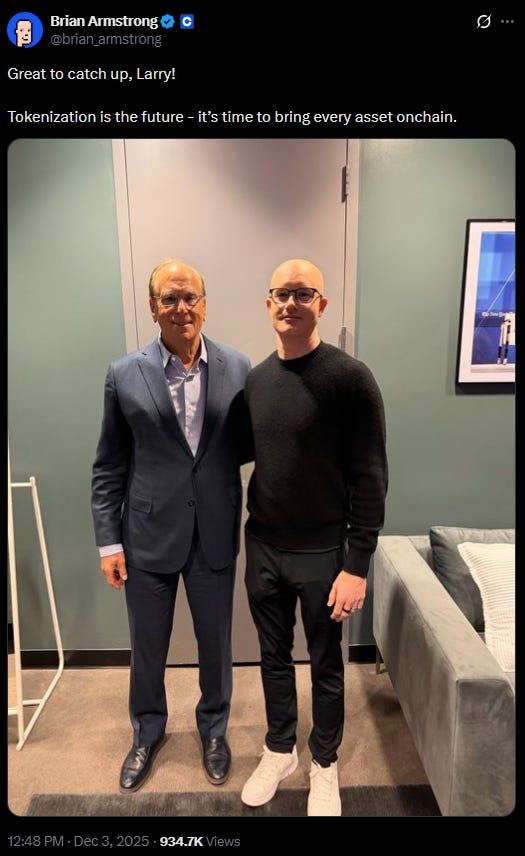
After The Economist published its article, Fink would later sit down with Coinbase CEO Brian Armstrong at a summit hosted by the New York Times4 on December 3rd, to discuss tokenization and the crypto space at large. Armstrong, posing with Fink, wrote in a tweet, “Tokenization is the future — it’s time to bring every asset onchain.”
Fink reiterated that tokenization will drastically accelerate transactions. “The whole idea of tokenization of all assets, including real estate, ultimately, is to just reduce huge friction costs, making investing easier, simpler,” he said. “You could do this all through your app, and it’s going to allow a more, I would say, a free-flowing process of investing.”
He also said that the rest of the world is way ahead of the U.S. and the West when it comes to digital finance, and emphasized that one of his “big fundamental issues” is “We need to move faster. We need to move faster as a country, even in AI.” And even though we are in a massive AI bubble, Fink retorted that there are going to be “some huge winners and huge failures” and there will be, he believes, a small handful of companies that have absurd valuations of $10 trillion, he explained. In other words, the wealth gap between the extreme haves and the extreme have-nots will only worsen; and tokenization is a fundamental tool to do that, and it begins in the markets.
As we examined in the third edition of RTT, Fink’s 2025 letter to investors, called “The Democratization of Investing,”5 discussed the instantaneousness closing of transactions tokenization allows, stocks and bond markets wouldn’t need to close. He wrote:
“Every stock, every bond, every fund—every asset—can be tokenized. If they are, it will revolutionize investing. Markets wouldn’t need to close. Transactions that currently take days would clear in seconds. And billions of dollars currently immobilized by settlement delays could be reinvested immediately back into the economy, generating more growth.”
The U.S. government is now legally allowing tokenized stocks and bonds to be traded on the market. A week after Fink’s remarks, Matthew Savarese, VP Global Head of Strategy at Nasdaq, told CNBC6he wants to “move as quickly as possible” on tokenized stocks.
“I think we have to really evaluate where the public comments come back in and then answer and respond to the Securities and Exchange Commission (SEC) questions as they come through. From a timing perspective, we’ll just move as fast as we can with the SEC and make sure that we try to push this through. We think that this is going to be an important topic of the administration, so we hope to kind of work with them as quickly as possible.”
He also noted that this move will allow the public to get a better handle on tokens. “I think it’s important to realize that you start to get the programmable nature of what blockchains and smart contracts are intended for.” He added, “We want everyone to come along with us for that ride and bring that kind of tokenization more into the mainstream, but we want to do it in that responsible investor-led way first under the SEC rules themselves.”
Days later, the SEC advanced proceedings7 to allow Nasdaq to begin tokenized trading, starting with securities. This should begin by Q3 of 2026. Additionally, the SEC provided The Depository Trust Company - a subsidiary of the Depository Trust & Clearing Corporation (DTCC) - the primary venue for U.S. listed stock clearing and settlement, with a three-year no-action letter allowing it to tokenize stocks. DTC’s approach will initially include the stocks of 1,000 companies from the Russell 1000 index, along with U.S. Treasury securities and ETFs tracking major indices. DTCC President and CEO, Frank LaSalla, said:
“Tokenizing the U.S. securities market has the potential to yield transformational benefits such as collateral mobility, new trading modalities, 24/7 access and programmable assets, but this will only be achievable if market infrastructure provides a robust foundation to usher in this new digital era.”
With 24/7/365 trading, the opening and closing bell on Wall Street is no longer needed and market swings can happen in the blink of an eye. Couple this with agentic AI trading to do the occupying when investors, traders (traitors) and gamblers are sleeping. Then couple that with insider trading.
Armstrong was asked about this during his chat with Fink, and he openly acknowledged heavy insider trading within these speculative markets with crypto. He said, “I actually had a really interesting conversation with one of the folks that was nominated to be CFTC commissioner about this. And he asked me, he said, ‘Do you think we should allow insider trading in prediction markets?’ And I said, ‘It’s a pretty it’s not as clear cut question, right?”
It’s not “clear cut?” In other words, tokenized trading will dramatically foster in the greatest wealth transfer in history, and is why tokenizing stocks, bonds, and exchanges is the first major goal of Western financial groups.
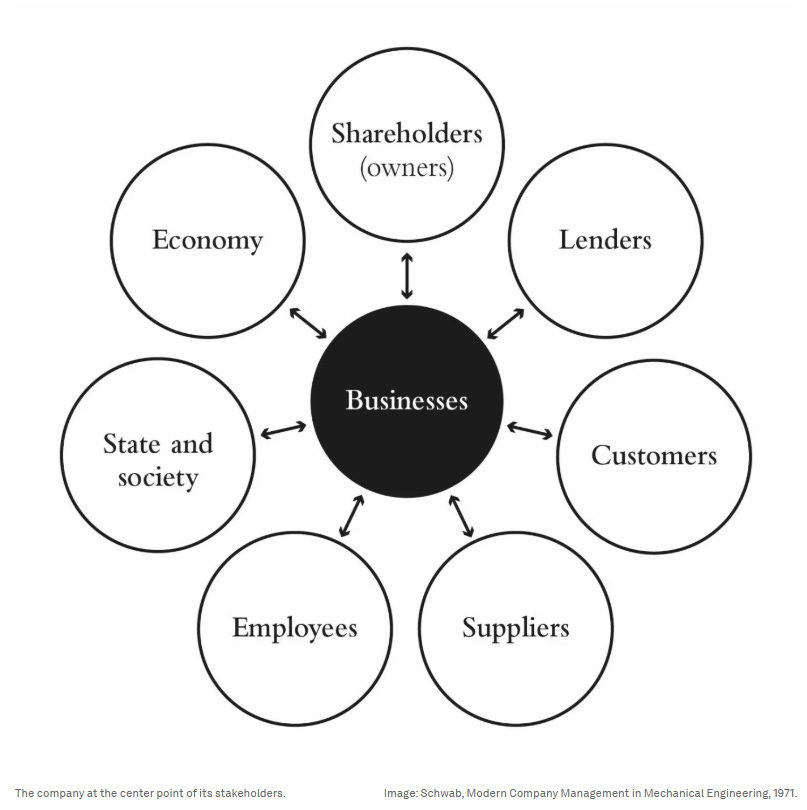
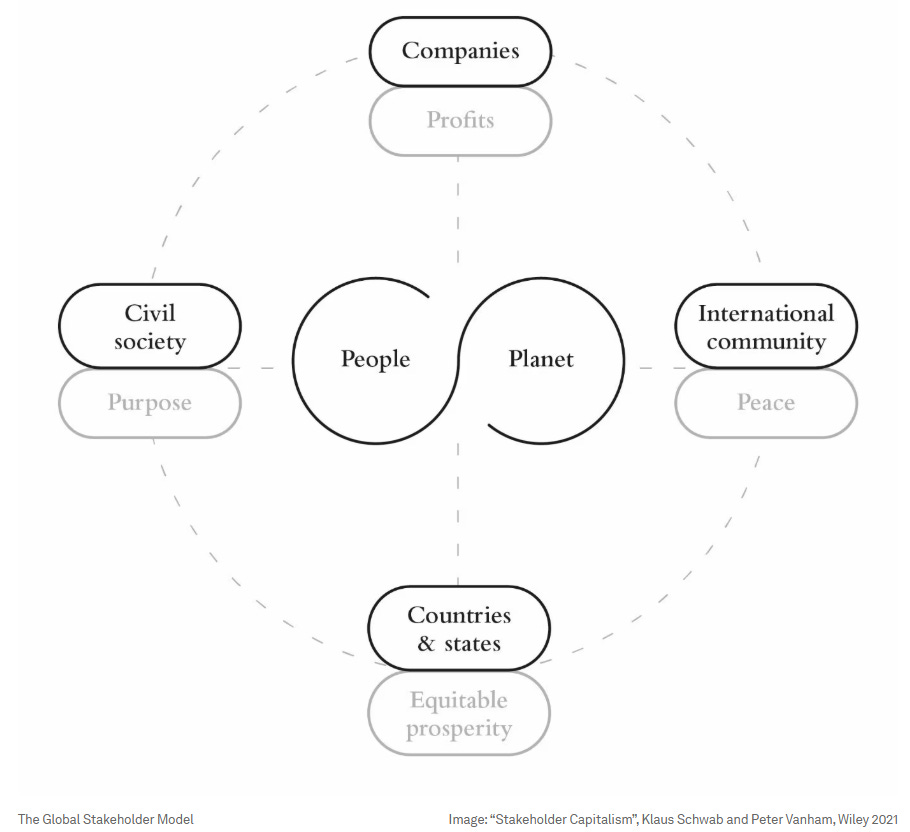
Tokenization also fulfills what the World Economic Forum (WEF) has described as “stakeholder capitalism,” a model invented by its founder Klaus Schwab in response to the disparities and inequality created by conventional capitalist models and globalization.
The idea is that this allows everyone apart from a company or a thing that has stake in it to get voting rights. Schwab wrote8 in a 2021 article:
“The core of stakeholder capitalism: it is a form of capitalism in which companies do not only optimize short-term profits for shareholders, but seek long term value creation, by taking into account the needs of all their stakeholders, and society at large.”
“Stakeholder capitalism, first of all, is also a form of capitalism: individuals and private companies make up the largest share of the economy. This is, we believe, a requirement for a sustainable economic system: Private individuals and companies must be able to innovate and compete freely, as it unleashes the creative energy and work ethic of most people in society.
“The economic activities of such private actors must also be protected and guided, to ensure the overall direction of economic development is beneficial to society, and no actor can freeride on the efforts of others. This is the kind of capitalism we ought to endorse.
“But stakeholder capitalism does fundamentally differ from the other forms of capitalism we saw, in a way that overcomes much of their shortcomings. First, all those who have a stake in the economy can influence decision-making, and the metrics optimized for in economic activities bake in broader societal interests.
“Moreover, a system of checks and balances exists, so that no one stakeholder can become or remain overly dominant. Both government and companies, the main players in any capitalist system, thus optimize for a broader objective than profits: the health and wealth of societies overall, as well as that of the planet and that of future generations.”
After Schwab’s departure in 2025, Fink was selected as the new co-chair of the WEF, along with Swiss billionaire André Hoffmann, who wrote how they will continue and strengthen the WEF’s initial principle. “We look forward to helping shape a more resilient and prosperous future, and to reinventing and strengthening the Forum as an indispensable institution for public-private cooperation,” they wrote.10
Going back to Fink’s letter to investors about tokenization, he went on to explain:
“Capitalism did work — just for too few people.
“Markets, like everything humans build, aren’t perfect. They reflect us — unfinished, sometimes flawed, but always improvable. The solution isn’t to abandon markets; it’s to expand them, to finish the market democratization that began 400 years ago and let more people own a meaningful stake in the growth happening around them.
“[…] Perhaps most importantly, tokenization makes investing much more democratic.
“It can democratize access. Tokenization allows for fractional ownership. That means assets could be sliced into infinitely small pieces. This lowers one of the barriers to investing in valuable, previously inaccessible assets like private real estate and private equity.
“It can democratize shareholder voting. When you own a stock, you have a right to vote on the company’s shareholder proposals. Tokenization makes that easier because your ownership and voting rights are digitally tracked, allowing you to vote seamlessly and securely from anywhere.
“It can democratize yield. Some investments produce much higher returns than others, but only big investors can get into them. One reason? Friction. Legal, operational, bureaucratic. Tokenization strips that away, allowing more people access to potentially higher returns.”
This language echoes verbatim how Schwab described stakeholder capitalism. As further proof that tokenization fulfills the WEF’ian model, in a since-deleted post by BNY Mellon, the tenth largest U.S. bank by assets, explained how tokenization supplants the stakeholder capitalism model. The authors wrote:
“Tokenization’s importance stretches far beyond investment access; it could also facilitate new investing models. Currently, most investments leverage shareholder capitalism, striving to optimize profits and share price. For example, when you buy a company’s stock, you provide money in exchange for a share, but how the company is run and governed is largely outside of your direct control. Since tokenization leverages smart contracts, it could manage both the financial investment as well as facilitate the voting and/or ownership rights associated with the investment.There is a possibility of incorporating a stakeholder capitalism model, a popular management theory in the 1950s and ‘60s that promoted benefits provided to the wider community, not just shareholders.
“With tokenization, is it possible to invest in a company but insist that the CEO be paid no more than 100x the median employee compensation or you automatically reclaim your original investment? (Currently, in the United States, the average is 274x that of the median employee.) Or could one invest in cutting-edge technology—computer vision, for example —and make the investment contingent on the fact that the owner could never sell the intellectual property to a company in the defense industry?”
Moreover, BNY Mellon then provides different examples of how tokenization fractionalizes investments like Fink describes. The megabank uses real estate and home ownership as an example. The authors wrote:
“A middle-class woman named Ms. Ganbold in Ulaanbaatar, Mongolia, makes the average income in the city, which is approximately $400 USD per month, and she would like to invest in Manhattan real estate, where prices nearly doubled in the 2010s.
“With traditional financial products, this would be extremely challenging considering the usual initial capital investment, if not a near impossibility. However, with tokenization, fractionalization—the division of an asset class into portions that are smaller than the whole—opens the door of opportunity for Ms. Ganbold.
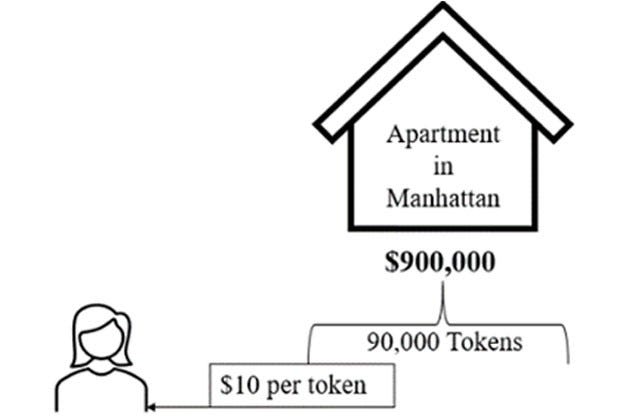
“Going back to Ms. Ganbold, she could invest in an apartment via tokenization. For example, the owner of a studio apartment on 79th street and Lexington knows the market value for his apartment is $850,000 but believes he can charge a premium for access through tokenization.
“The owner tokenizes his apartment at a value of $900,000, into a total of 90,000 tokens, with each token amounting to almost 0.001% of the apartment’s value. In addition, with a contract, he ensures selling the apartment within 10 years or when the market value is at least 50% higher, whichever comes first. With each token at $10 USD, investing in Manhattan real estate now becomes a possibility for Mrs. Ganbold, despite her level of income. Unlike traditional ownership rights, the apartment tokens would be just an investment, and she would not be able to use or live in the apartment.”
During Fink and Armstrong’s chat, Fink reiterated the votership rights and one’s digital identity verified in real-time with tokenization.
“If we were able to tokenize every stock, we would know instantaneous the asset owner of record. So I’d be the I would be transacting the trade on behalf of that owner of record. If we tokenize, we ultimately democratize everything related to voting. Every holder of the asset will have the ability to vote.
“[…] If we get back to tokenization, which we’re excited about, every asset owner of record [at] that moment will be the ultimate voter of record.”
The host of that discussion, Andrew Ross-Sorkin, pointed out that “There’s a bunch of companies [like] Robinhood and others have tried to or effectively trying to tokenize private companies, so that you could sell pieces of those private companies to the public without the same disclosures.”
This stakeholder capitalist model with fractionalized ownership can be applied to any tokenized asset. More recently, popular influencer and crypto scammer Logan Paul recently sold a Pokémon card he owns valued at $5.3 million. He retained 49% ownership of the card, while allowing the other 51% to be purchased in fractionalized tokens. “The card was listed on Liquid Marketplace, a platform co-founded by Paul that allows users to buy fractionalized pieces of high-end collectibles. Co-owners of items are paid based on their ownership stakes when items are sold,” Yahoo! News reported.11 But, unsurprisingly, there was a problem with the platform and the token holders never got their payments when Paul went to buyback the entire card and interest. In June 2024, the Ontario Securities Commission filed an application for enforcement proceedings against the company and its executives alleging “multi-layered fraud in the crypto asset sector.”
I have zero clue why anyone would want fractional ownership of colorful cardboard, but nonetheless, if such fraud and extortion can take place with tokenization at this scale, imagine the fraud and “technical errors” that will frequently occur at a much larger scale!
But, as we see, one never truly owns anything, but rather becomes a perpetual renter, while the majority stakeholder is able to continue to generate more accrued wealth in the greatest usury scheme ever concocted. Thus, tokenization and the stakeholder capitalism model help to fulfill the WEF’s moniker: “You will own nothing and be happy” by the year 2030.
As Proverbs 22:7 says, “The rich ruleth over the poor, and the borrower is servant to the lender.” Fink, world institutions, central banks and more, have created for themselves an ‘infinite money glitch’ to endlessly enrich themselves, stealing the best assets for themselves, while enslaving the masses in extreme techno-neo-feudalism.
Fink can call it “fractional ownership” and “democratizing investment” all he wants; tokenization is not ownership and never will be, and that is why everyone needs to reject it for their own personal sovereignty and freedom.
For more on the latest research concerning tokenization, digital IDs, the control grid rollout and pre-crime surveillance state rapidly being built around the world, please consider following my work at winepressnews.com and on Substack for more in-depth reports such as this.
Thanks for reading The WinePress News! This post is public so feel free to share it.
On one of his missionary journeys, the apostle Paul visited Athens, Greece, where he said he witnessed “the city wholly given to idolatry,” and who were “too superstitious” and worshipped a plurality of gods and deities, though the people acknowledged that there was still one God above all that was a mystery to them. When questioned by the philosophers …
[7] Who goeth a warfare any time at his own charges? who planteth a vineyard, and eateth not of the fruit thereof? or who feedeth a flock, and eateth not of the milk of the flock? [8] Say I these things as a man? or saith not the law the same also? [9] For it is written in the law of Moses, Thou shalt not muzzle the mouth of the ox that treadeth out the corn. Doth God take care for oxen? [10] Or saith he it altogether for our sakes? For our sakes, no doubt, this is written: that he that ploweth should plow in hope; and that he that thresheth in hope should be partaker of his hope. (1 Corinthians 9:7-10).
The WinePress needs your support! If God has laid it on your heart to want to contribute, please prayerfully consider donating to this ministry. If you cannot gift a monetary donation, then please donate your fervent prayers to keep this ministry going! Thank you and may God bless you.



Great article!
This will fail. Fink is a demon and will be held accountable in the near future.