

Climate Lockdown: International Energy Agency Declares Energy Crisis Worse Than '70s Oil Shock And Ukraine War, As Supply Chains Breakdown And Nations Declare Stay-At-Home Orders
The IEA proposes "car-free Sundays," driving slower, working from home and more to reduce the use of oil.


Roughly a week and a half ago, on Friday the 13th, The WinePress reminisced on the 6th Anniversary of the launch of “The Covid War” (as I like to call it, as the politicians and media outlets call it a war), the day that Trump declared Covid-19 and “emergency” and soon after began the infamous “15 Days to Stop the Spread,” and it all went spiraling from there.
Fast forward to now and we are seeing an identical, near rerun of the same events and responses as a result of the war in Iran and the closure of the Strait of Hormuz.

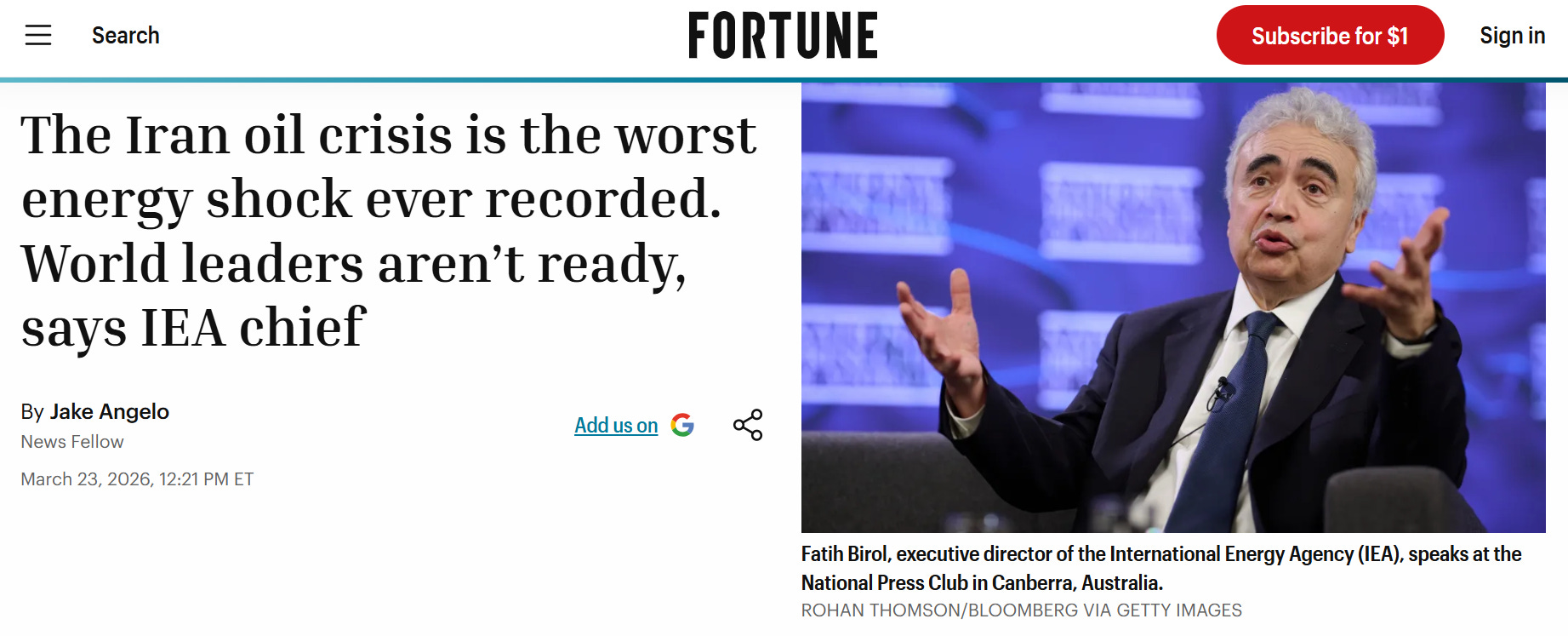
Over the weekend, International Energy Agency (IEA) Executive Director Fatih Birol warned that this latest oil and energy issue surpasses that of the 1970’s oil shock and the the Russia-Ukraine war.
“This crisis, as things stand, is now two oil crises and one gas crash put all together,” Birol said at the National Press Club of Australia in Canberra.
“Many of us remember the two consecutive oil crises in [the] 1970s: 1973 and 1979. In each of the crises, the world has lost about 5 million barrels per day, both of them together 10 million barrels per day.
“And today, only as of today, we lost 11 million barrels per day, so more than two major oil shocks put together.”
In a news release on March 20th, Birol added:
“The war in the Middle East is creating a major energy crisis, including the largest supply disruption in the history of the global oil market. In the absence of a swift resolution, the impacts on energy markets and economies are set to become more and more severe.
“As the global energy authority, the IEA is doing everything we can to support the stability of energy markets. We have recently launched the largest ever release of IEA emergency oil stocks – and I am in close contact with key governments around the world, including major energy producers and consumers, as part of our international energy diplomacy.
“In addition to this, today’s report provides a menu of immediate and concrete measures that can be taken on the demand side by governments, businesses and households to shelter consumers from the impacts of this crisis. It draws on the IEA’s decades of expertise in this field and highlights measures that have been proven to work in practice in different contexts. I believe it will be of use to governments around the world, in both advanced and developing economies, in these challenging times.”
The recommendations involve limiting ways to reduce oil and LNG use, from driving less to staying home and working remotely.
Work from home where possible
Displaces oil use from commuting, particularly where jobs are suitable for remote work.Reduce highway speed limits by at least 10 km/h
Lower speeds reduce fuel use for passenger cars, vans and trucks.Encourage public transport
A shift from private cars to buses and trains can quickly reduce oil demand.Alternate private car access to roads in large cities on different days
Number-plate rotation schemes can reduce congestion and fuel-intensive driving.Increase car sharing and adopt efficient driving practices
Higher car occupancy and eco-driving can lower fuel consumption quickly.Efficient driving for road commercial vehicles and delivery of goods
Better driving practices, vehicle maintenance and load optimisation can cut diesel use.Divert LPG use from transport
Shifting bi-fuel and converted vehicles from LPG to gasoline can preserve LPG for cooking and other essential needs.Avoid air travel where alternative options exist
Reducing business flights can quickly ease pressure on jet fuel markets.Where possible, switch to other modern cooking solutions
Encouraging electric cooking and other modern options can reduce reliance on LPG.Leverage flexibility with petrochemical feedstocks and implement short-term efficiency and maintenance measures
Industry can help free up LPG for essential uses while reducing oil consumption through quick operational improvements.
The recommendations are identical to those they issued after the fallout from the Russia-Ukraine war, with supply chains being cut-off and energy, commodities and fertilizer contracts declared force majeure, The WinePress reported at the time. The IEA claimed on March 18th, 2022 — nearly the same time they issued their most recent warning — that “Government regulations and mandates have proven to be very effective for successfully implementing these measures in various countries and cities, combined with public information and awareness campaigns.”
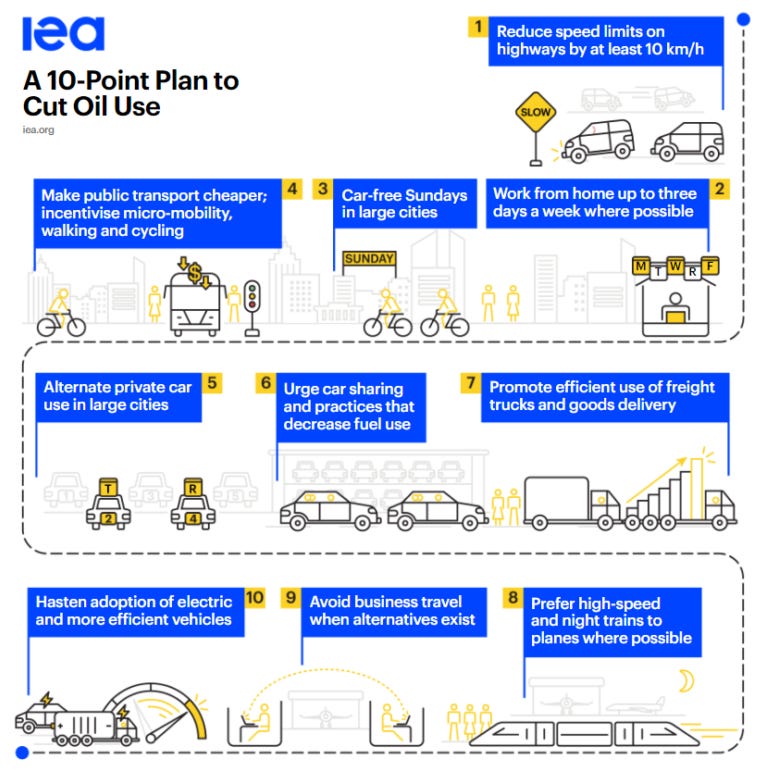
The IEA’s ten-step goals – which align with many of the World Economic Forum’s aspirations (linked below) – are as follows, noting how much oil will be preserved if a specific step is implemented. One of the recommendations included “car-free Sundays.”
Reduce speed limits on highways by at least 10 km/h (290 kb/d of oil from cars and 140 kb/d from trucks – Has the speed limit been reduced in your city? Here’s why
Work from home up to three days a week where possible (One day a week saves around 170 kb/d; three days saves around 500 kb/d) – 5 research-backed reasons working from home will stick; Could ‘hybrid working’ usher in a golden age for workers?
Car-free Sundays in cities (Every Sunday saves around 380 kb/d; one Sunday a month saves 95 kb/d) – Car-free day – and the other 364 days of the year; This is what happens when cities ban cars from the roads
Make the use of public transport cheaper and incentivize micromobility, walking and cycling (330 kb/d) – Why your next car is a bike
Alternate private car access to roads in large cities (210 kb/d) –Uber CEO Travis Kalanick: soon, nobody will own a car; Goodbye car ownership, hello clean air: welcome to the future of transport
Increase car sharing and adopt practices to reduce fuel use (470 kb/d) – What is the future of car sharing?; What’s the best way to reduce fuel consumption?
Promote efficient driving for freight trucks and delivery of goods (320 kb/d) – Road Freight Zero: Pathways to faster adoption of zero-emission trucks; Delivering the Goods: E‑commerce Logistics Transformation
Using high-speed and night trains instead of planes where possible (40 kb/d) – Fall asleep in Vienna, wake up in Paris – Europe’s night trains make a comeback
Avoid business air travel where alternative options exist (260 kb/d) – How to reduce your carbon footprint as a travelling professional?
Reinforce the adoption of electric and more efficient vehicles (100 kb/d) – This is how electric cars will transform our lives
As of March 19th, the IEA published a list of what many different nations are doing so far to deal with this energy shockwave. Bangladesh is telling residents to turn off unnecessary lighting and limit fuel for vehicles; Indonesia is pushing the switch to electric scooters; Myanmar is promoting driving on alternate days; Pakistan is closing schools, having 4-day work weeks for government officials, reducing speed on highways and more; Sri Lanka is doing something and has even implemented QR-code based fuel rationing; France, Japan, South Korea and others are capping prices at the pump; while others are adjusting their tax policies.
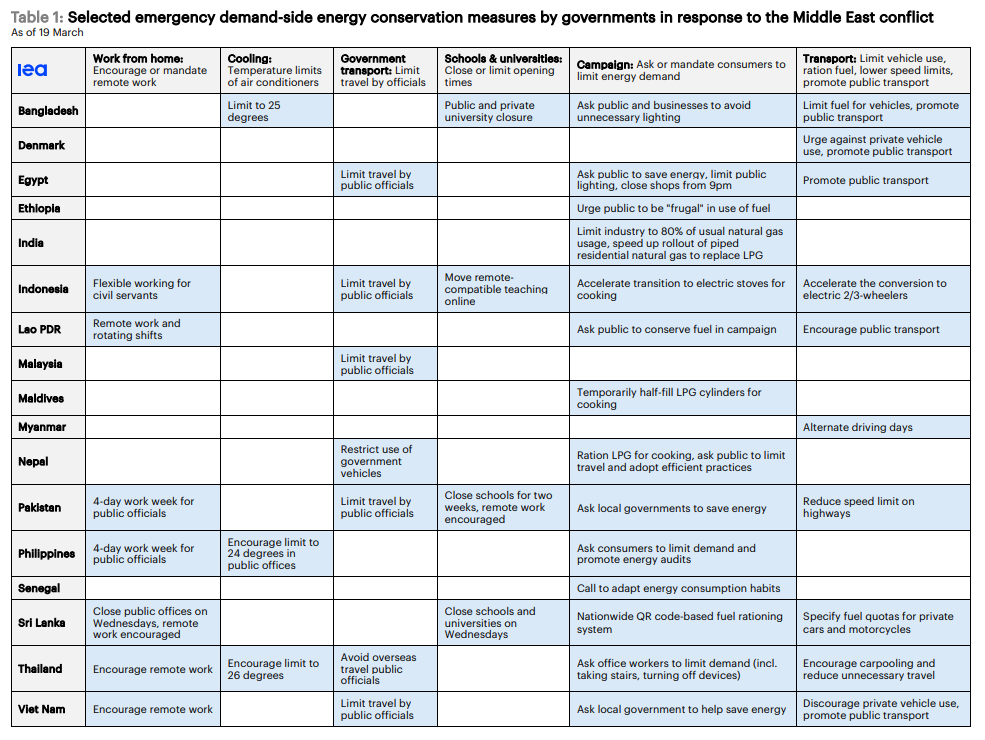
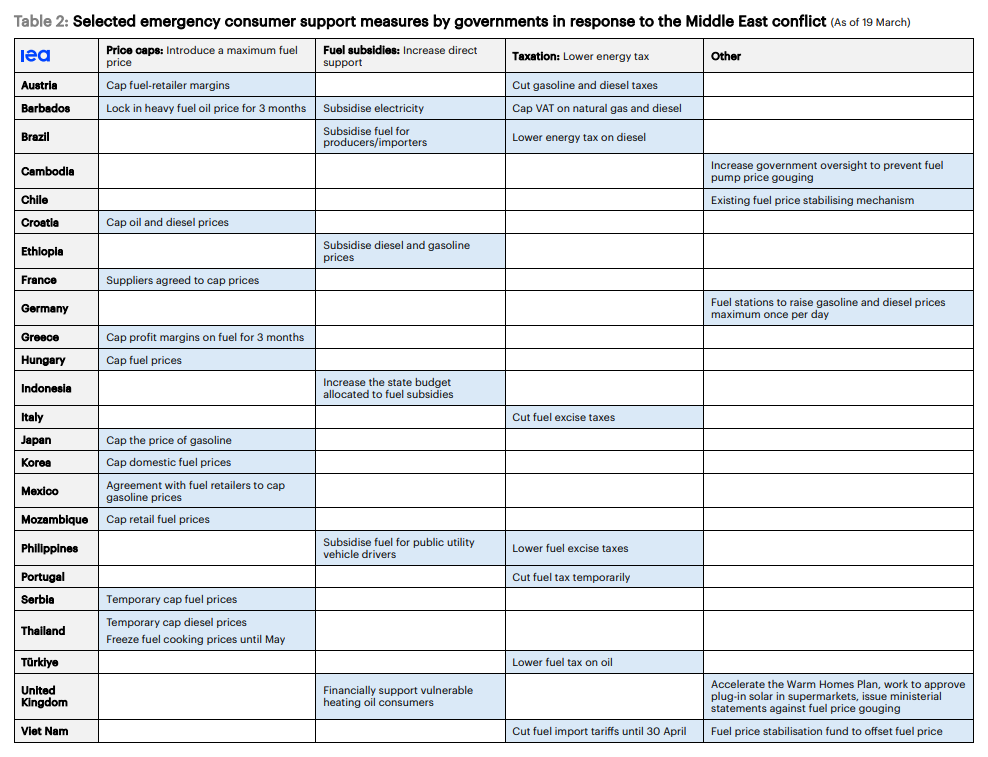
The list has since grown.
Australia is the latest country to introduce quasi-lockdown and fuel rationing measures in order to deal with a purported energy crisis.
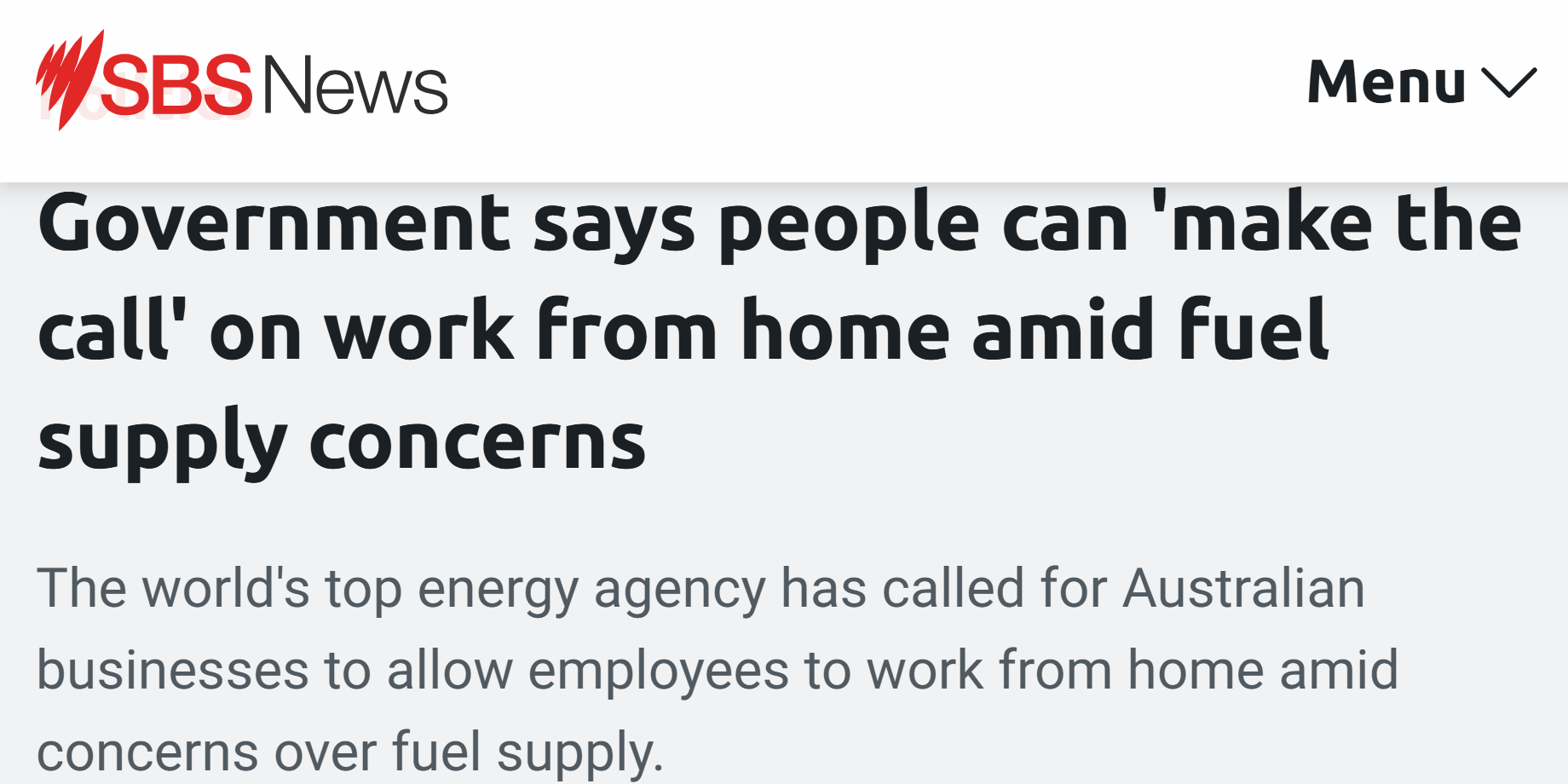
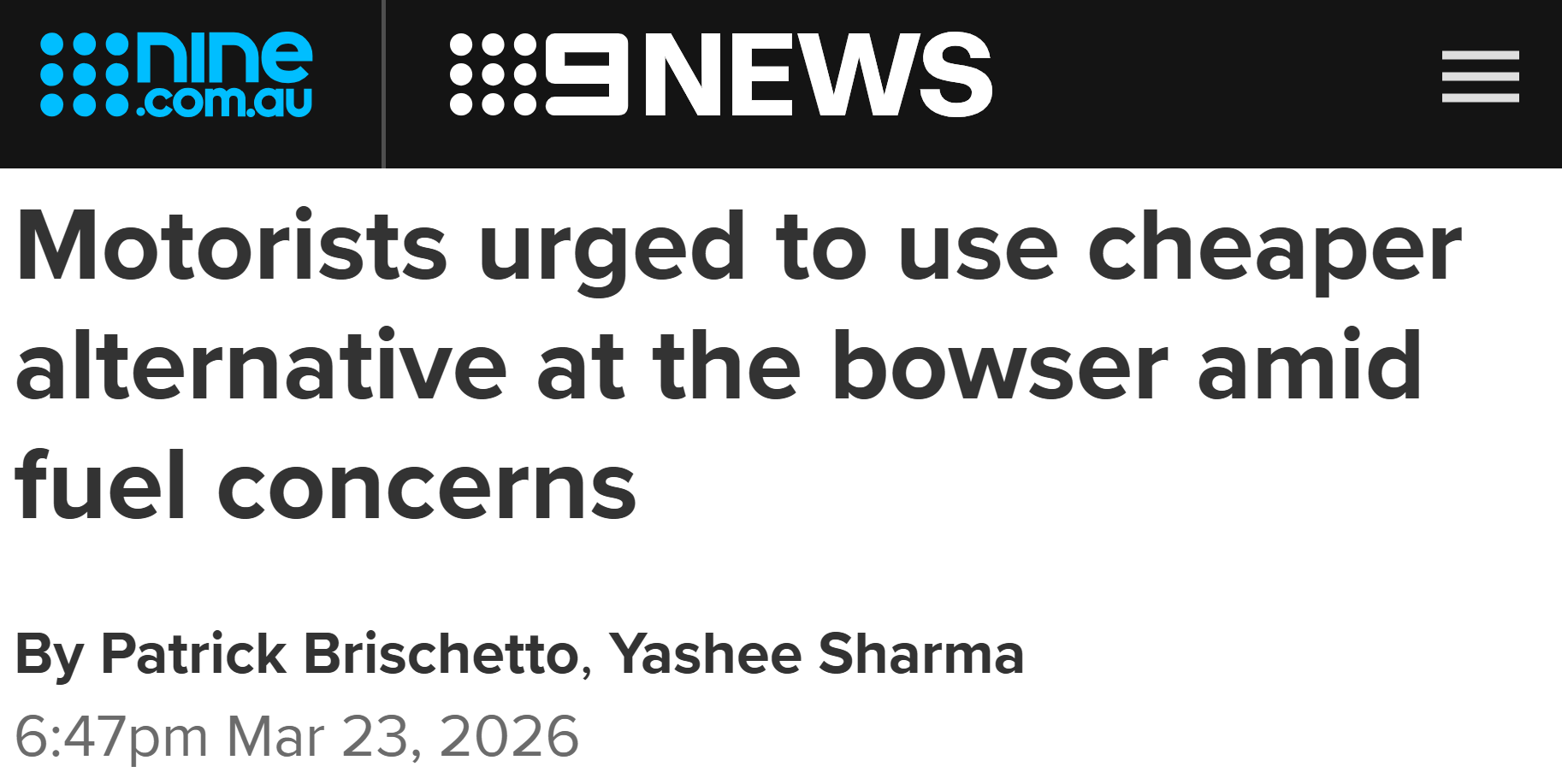
The country is considering fuel caps at $40 AUD, which is not a lot of fuel. Some stations are reportedly dry after due to panic buying, national media reports.
Australian media is also pushing a rise in electric vehicle sales.
IEA’s Briol recently visited Australian Prime Minister Anthony Albanese to discuss the energy crisis in the country.
Other countries in the European Union and the United Kingdom are discussing enacting different measures such as reducing speeds, or avoiding driving as much as possible, and telling businesses to turn off unnecessary appliances overnight.
The energy crisis is also putting a strain on farming and agricultural operations. Christian Westbrook, UNSHADOWED (IAF), reported that Ireland and Thailand are halting their fishing boats because they cannot afford diesel. Spain just passed a 25 million euro package to help its commercial fishers, but there are already debates about whether that is enough funding.
Australian media today warned that their crop production could be “halved” due to a fertilizer shortage. News.com.au reported:
“I’ve been farming all my life, I’ve never missed a year, I’ve seen good ones and bad ones … I don’t think I’ve ever gone into a season with quite the level of concern I have right now,” said Tony Seabrook, president of the Pastoralists and Graziers Association of Western Australia.
“Stress levels are extremely high and people don’t know what to do.”
Mr Seabrook, who grows wheat, barley and canola, said he had placed a fuel order around three weeks ago, amounting to around one third of what he will need to complete his crop, and it had only just come through.
“The distributors are doing everything they can,” he said. “Even [Energy Minister Chris] Bowen was on the news this morning saying they don’t see any problems until mid to late April. That’s five minutes away. He’s thinking more about in town at the bowser. I just cannot comprehend the thought that we might not have enough fuel to plant a crop.”
Mr Seabrook said his nightmare scenario was “that we don’t have enough diesel to complete the crop” in November. “If we manage to get the crop in the ground but didn’t get enough diesel, God save us if we can’t get enough diesel to harvest it,” he said.
National Farmers’ Federation president Hamish McIntyre said at the moment “we believe we have enough urea on ships and in Australia to secure this winter crop”.
“What we don’t have is enough to apply in-crop and get set up for summer crops,” he said. “If we can’t get our in-crop requirements after May, the winter crop in Australia could be halved.”
Michael Coote, chief executive of Ausveg, said vegetable growers had “no capacity to absorb” the increased costs.
“Vegetable growers heavily rely on diesel to run their farms and have already seen the price double with increasing reports of shortages in regions across the country,” he said.
In addition, he said, freight costs to get produce to market had gone up, with increases of more than 50 per cent reported over the weekend.
“Fertiliser suppliers have doubled some prices over the past two weeks with questions over future supply, and concerns have been raised over supply and cost of other key inputs like plastics for packaging as the manufacturing industry sounds the alarm,” Mr Coote said.
Unless vegetable growers receive “viable farmgate prices, we’ll see more making hard decisions about their future farming activities”.
“Growers across the country are reporting to Ausveg that they are seriously considering whether to plant or harvest crops, with some growers making these decisions as early as this week,” Mr Coote said.
“With 98 per cent of fresh vegetables consumed in Australia grown here, any significant reduction in crop volumes will impact the harvest and supply of fresh produce to Australian families. The potential likelihood of vegetable shortages will be further impacted with international shipping disruptions also likely to affect the supply of imported frozen and other processed vegetables.”
The NFF says any fuel rationing plan should put essential services first, followed by food production. “Perishable dairy, then fresh vegetables, then intensive animal industries — chicken, pork, red meat — then the grain production sector,” Mr McIntyre said.
AUTHOR COMMENTARY
It’s become painfully obvious to those of us who are paying attention that we are seeing the reintroduction of the Covid War era mandates, and a resurgence of the “green” economy that the World Economic Forum and these other globalist institutions have been talking about for years now.
Again, how ironic is it that we were told, here in the United States, that Biden and the Dems were the ones to usher in this global communism under manufactured climate alarmism, yet now it is under Trump and this war that Israel dragged us into that is being used to reintroduce this familiar taste of poison.
The agenda never changed, it simply put on a new hat.
As Westbrook detailed, all of this is about implementing the digital ID, CBDC, tokenized and blockchain economy where everything is tracked and traced in real-time, 24/7/365; which The WinePress has detailed repeatedly before. This manufactured crisis will accelerate that, just as the Covid War did and just as the Russia-Ukraine war has too.


Meanwhile, the U.S. has its own cargo vessel manufacturing problem. China is building roughly 1,000 vessels annually, while the U.S. can barely scrounge up 3. Trump has made this a national security issue, but he has also laid hefty tariffs on steel and other sectors needed for shipbuilding, making domestic manufacturing significantly more expensive. This CBS 60 Minutes segment truly highlights the death of the empire right in front of our eyes.
The bottom line is that the world is being plunged into another catastrophe, the next leg of the ‘New Normal’ and Great Reset. Even if the war ended tomorrow and the Strait of Hormuz was completely reopened with no restrictions, the repercussions would be felt for years to come. Yet we all know at this point that this will drag on and on. We can hope that it ends soon, but I sadly doubt that it will.

Mark 13:7 And when ye shall hear of wars and rumours of wars, be ye not troubled: for such things must needs be; but the end shall not be yet. [8] For nation shall rise against nation, and kingdom against kingdom: and there shall be earthquakes in divers places, and there shall be famines and troubles: these are the beginnings of sorrows.
If you enjoy this report and others like it, please consider sharing this post and supporting The WinePress down below!
The Lord Of Glory: The Detailed Guide To Who God Is – Available Now!

On one of his missionary journeys, the apostle Paul visited Athens, Greece, where he said he witnessed “the city wholly given to idolatry,” and who were “too superstitious” and worshipped a plurality of gods and deities, though the people acknowledged that there was still one God above all that was a mystery to them. When questioned by the philosophers …
[7] Who goeth a warfare any time at his own charges? who planteth a vineyard, and eateth not of the fruit thereof? or who feedeth a flock, and eateth not of the milk of the flock? [8] Say I these things as a man? or saith not the law the same also? [9] For it is written in the law of Moses, Thou shalt not muzzle the mouth of the ox that treadeth out the corn. Doth God take care for oxen? [10] Or saith he it altogether for our sakes? For our sakes, no doubt, this is written: that he that ploweth should plow in hope; and that he that thresheth in hope should be partaker of his hope. (1 Corinthians 9:7-10).
The WinePress needs your support! If God has laid it on your heart to want to contribute, please prayerfully consider donating to this ministry. If you cannot gift a monetary donation, then please donate your fervent prayers to keep this ministry going! Thank you and may God bless you.
Oh my! It's that word "crisis" again. Looks like they're at it again.
Thank you
I remember the gas lines in the seventies. I was a teenager then. Lives in Houston, TX.
I don’t remember it being that bad… we somehow got gas.
What I remember most about that time was no money. Everyone was broke and inflation was out of control.
Then we got Ronald Reagan MAGA movement and the world carried on. Then we got read my lips CIA Bush, then the damn Clinton’s come in and sold us all off to China using Bushes NAFTA draft.
And here we sit…
We now depend on China for everything. So tell me again how we are at war with China? All of our wealth was sent to China to make China great again. We are allowing 500 thousand Chinese students into our education system a year. A half a million! Yet, we are to believe that we are at war with China?
Americans are stupid ignorant from years of propaganda permeating every aspect of our society. Education is even propaganda, which makes me wonder why the very smart Chinese would even want an American education??